
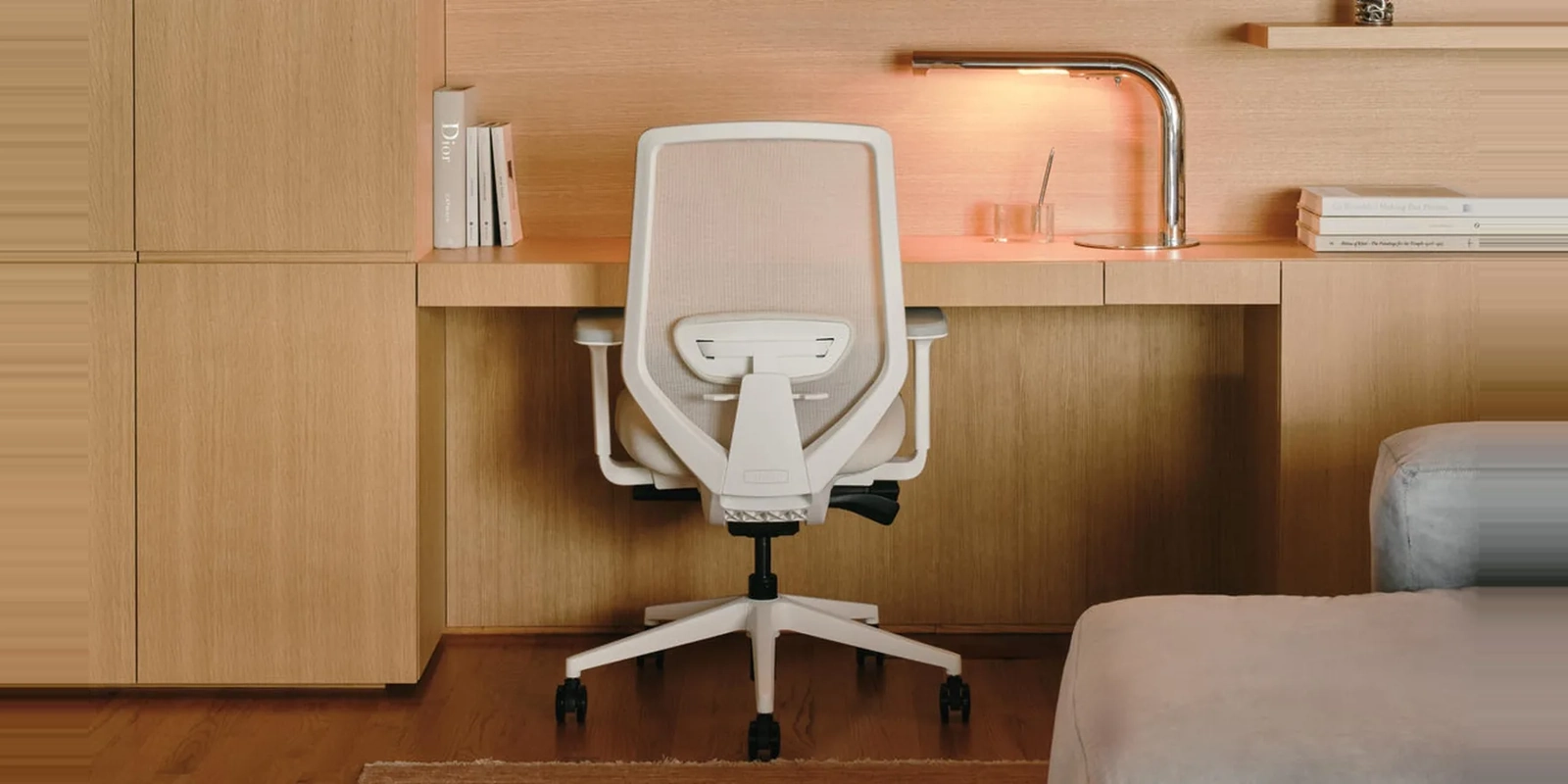
The Branch Ergonomic Chair Pro targets a difficult middle ground. It costs more than many direct-to-consumer mesh chairs, but substantially less than premium contract seating. In return, it promises the adjustments home-office buyers are most likely to use: seat depth, five-direction armrests, adjustable lumbar support, recline control, and forward tilt.
The Ergonomic Chair Pro is a strong choice for buyers who want more control than a basic chair and a seven-year warranty without moving into four-figure pricing. It is less compelling for people above its 275-pound published capacity, buyers who need assembled delivery, or anyone who cannot confirm a comfortable fit within the return window.
This Branch Ergonomic Chair Pro review covers the chair’s key features, adjustability, fit, warranty, value, and closest alternatives.
Quick Verdict
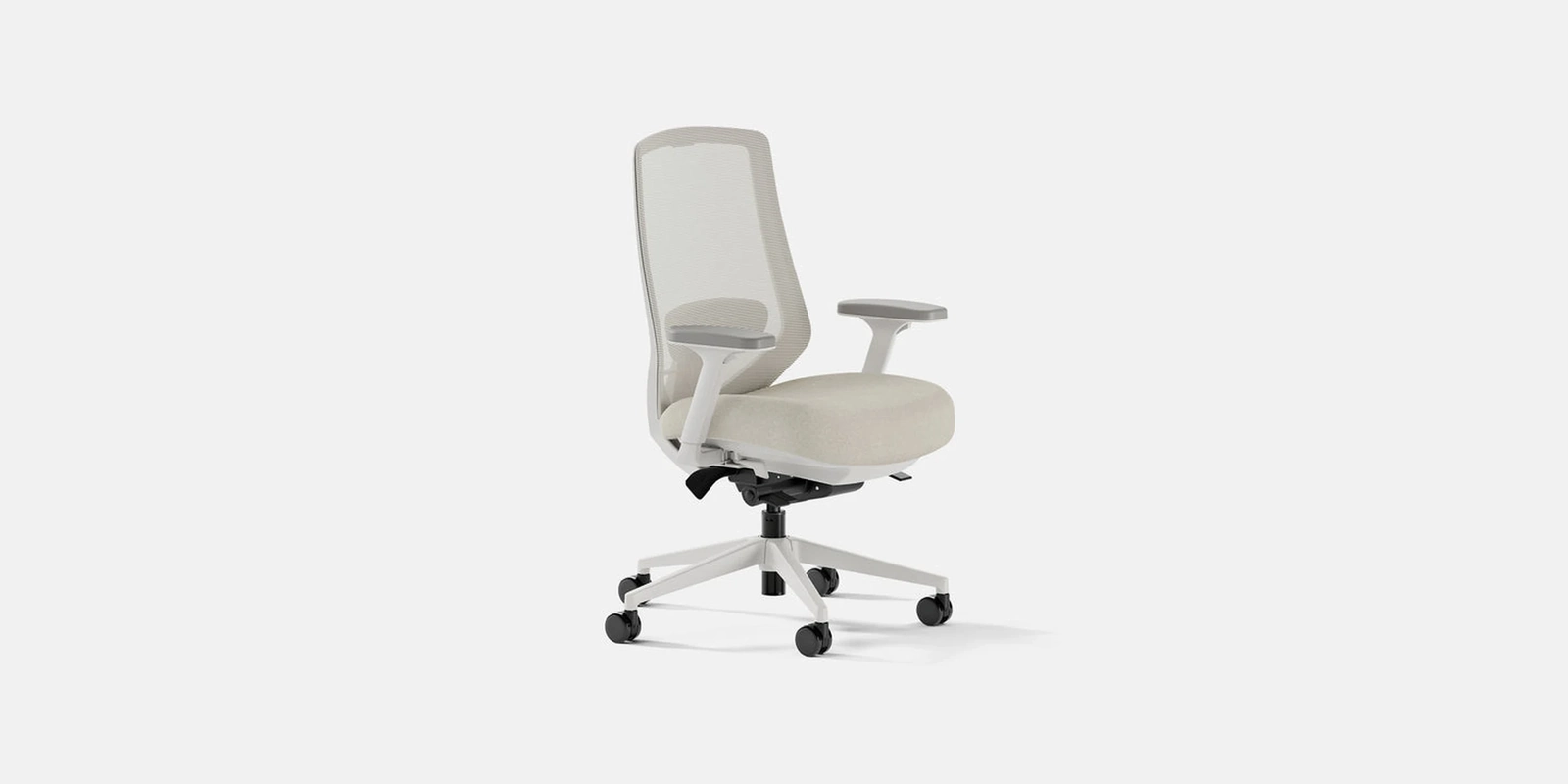
- Best for: Full-time home-office users seeking broad task-chair adjustment near the $500 level.
- Skip if: You need a capacity over 275 pounds, want a chair delivered assembled, or prefer a soft upholstered back.
- Main strength: Fourteen published adjustment points that address seat, arms, lumbar support, and tilt.
- Main limitation: The 275-pound capacity limits fit for some buyers, while optional accessories can raise the total price.
- Value verdict: Competitive if the controls fit your body and desk; less persuasive if you must add several options.
Who Should Buy the Branch Ergonomic Chair Pro?
The Pro makes sense for a remote worker who spends much of the day at a keyboard, wants to alternate between upright and slightly reclined positions, and can benefit from seat-depth and armrest adjustment. It also suits buyers who find entry-level chairs too limited but are not ready to pay for a Haworth Fern or similar premium chair.
Published dimensions matter. Branch lists overall dimensions of about 25 inches wide, 24 inches deep, and 38–41.2 inches high with the standard cylinder. A tall-cylinder configuration increases the height range. The 275-pound capacity is a clear boundary, not a comfort guarantee. Compare the seat and cylinder measurements with a chair that already fits you.
Who Should Skip It?
Skip the Pro if you need a wider or higher-capacity chair, want a fully assembled product, or cannot retain the packaging during the decision period. Buyers who like a pronounced cushioned back may not prefer a mesh-back task chair. If you need a headrest, include the optional headrest in the real purchase price and verify that its range suits your height.
Key Features and Adjustments
Seat height and depth
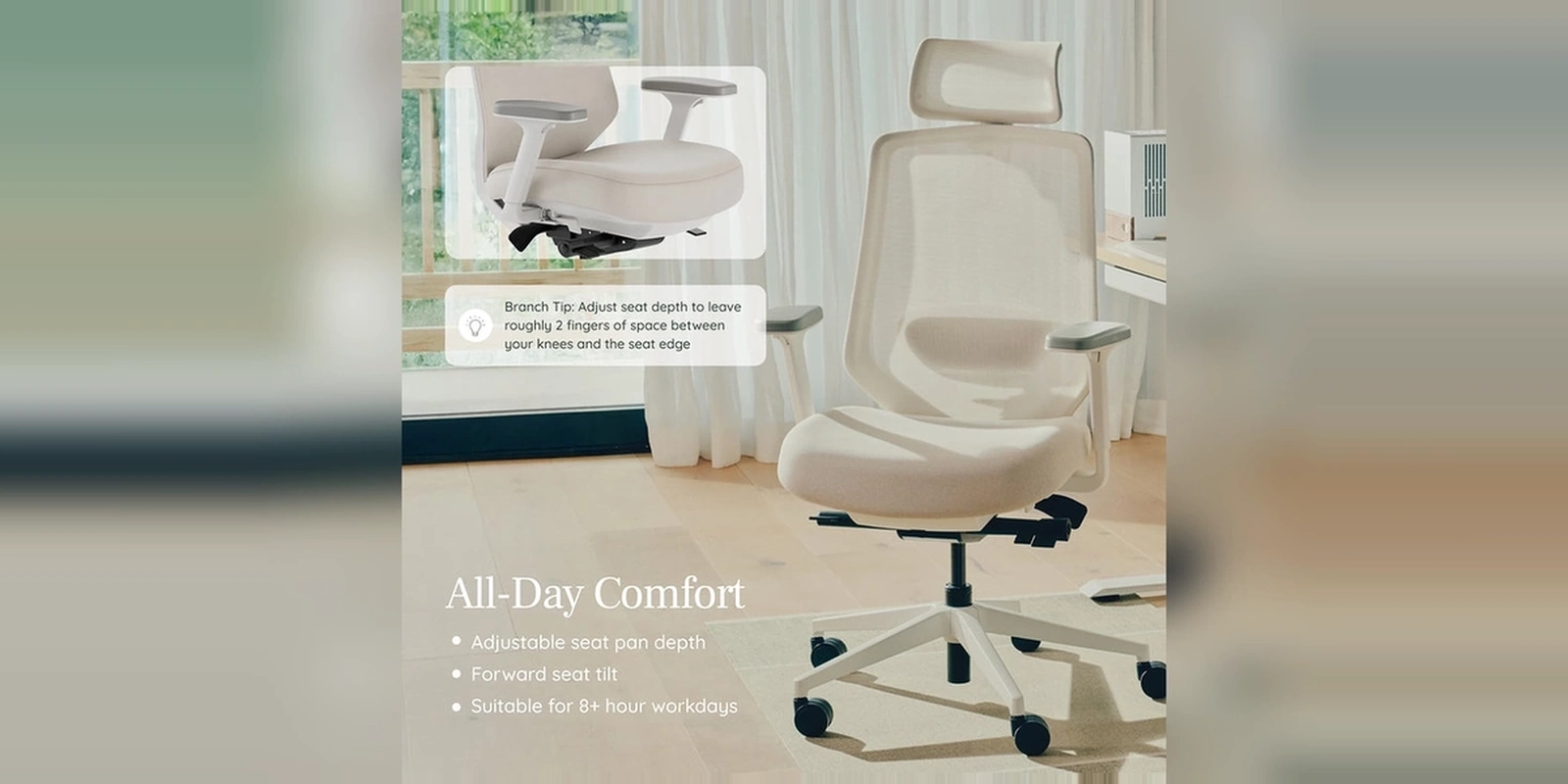
Seat-depth adjustment is one of the Pro’s most useful controls. It lets a user change how much thigh support the seat provides and reduce pressure behind the knees. The height cylinder positions the elbows and feet relative to the desk; Branch also offers a tall cylinder for users who need additional height. A footrest may still be necessary with a high fixed desk.
Five-direction armrests
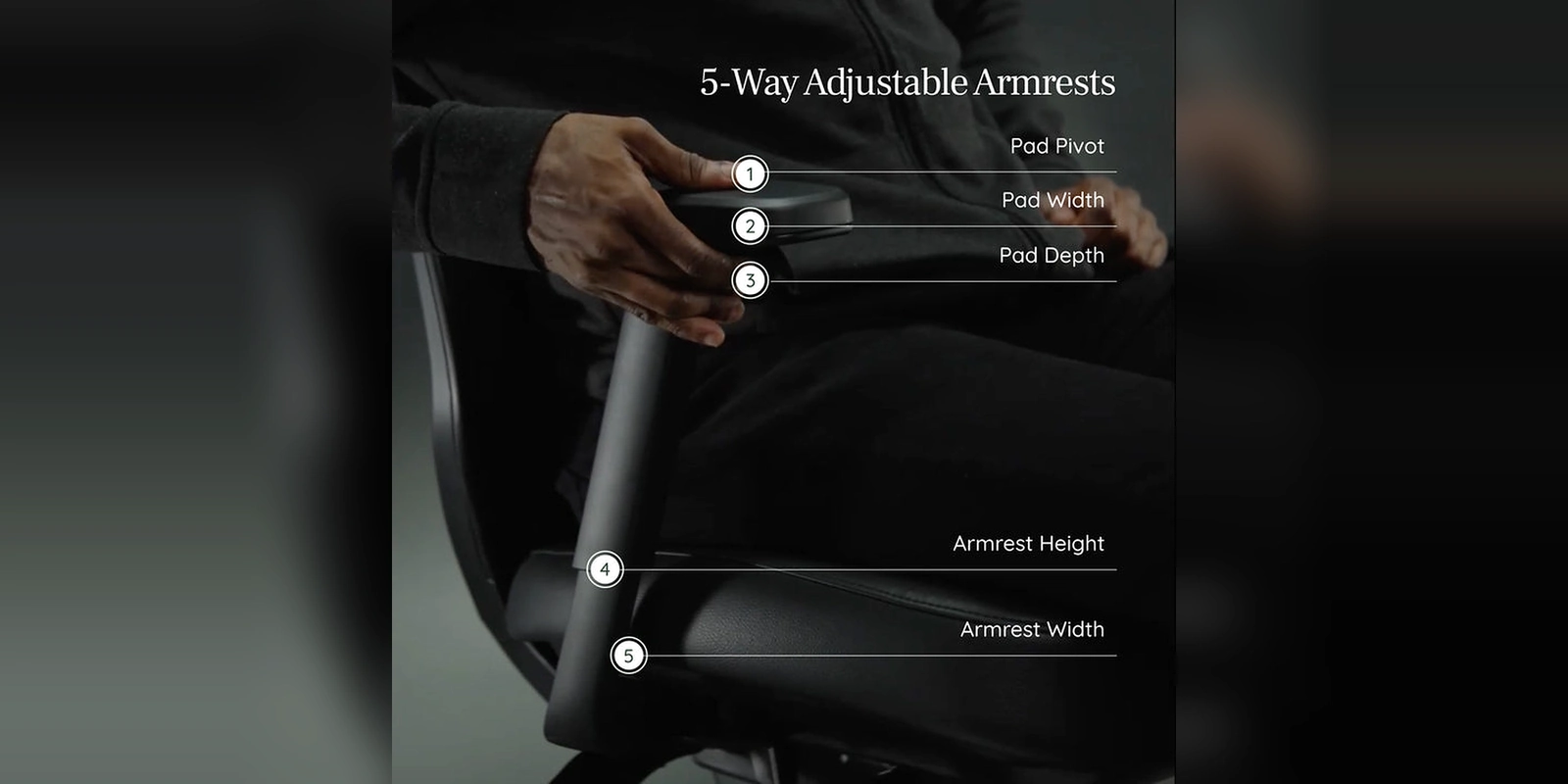
Branch describes the arms as 5D. The practical benefit is the ability to move the pads beyond simple height adjustment so they can better meet a keyboard, mouse, or narrower shoulder position. More movement can also create more opportunities for play or accidental movement, so buyers who prefer simpler controls may want to consider that tradeoff.
Two-way lumbar support
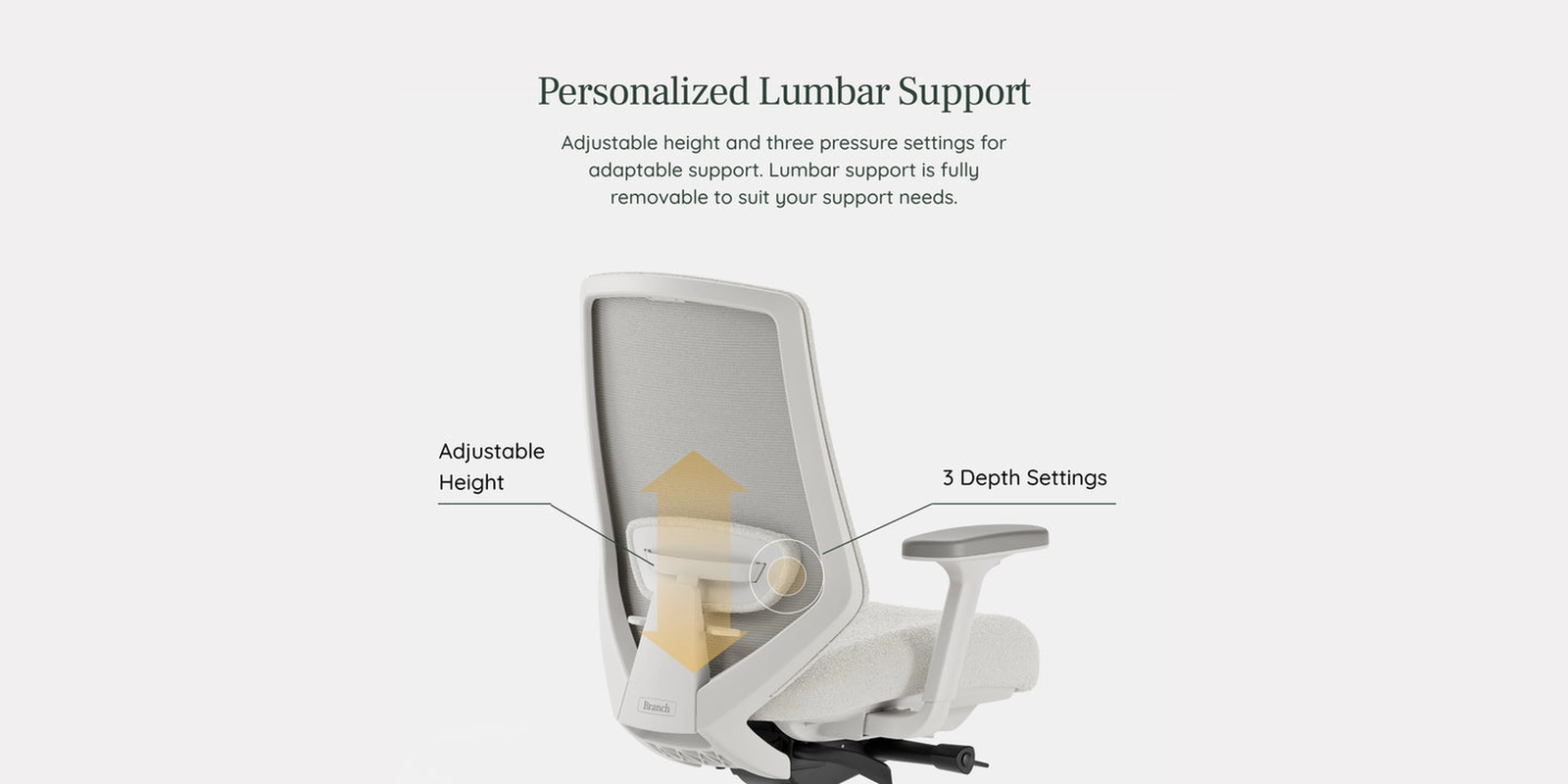
The lumbar pad is adjustable in two directions and removable. The adjustable, removable design gives users more flexibility than a fixed lumbar pad. Its main value is configurability, especially for buyers who prefer to fine-tune how much lumbar support they use.
Recline, tension, and forward tilt
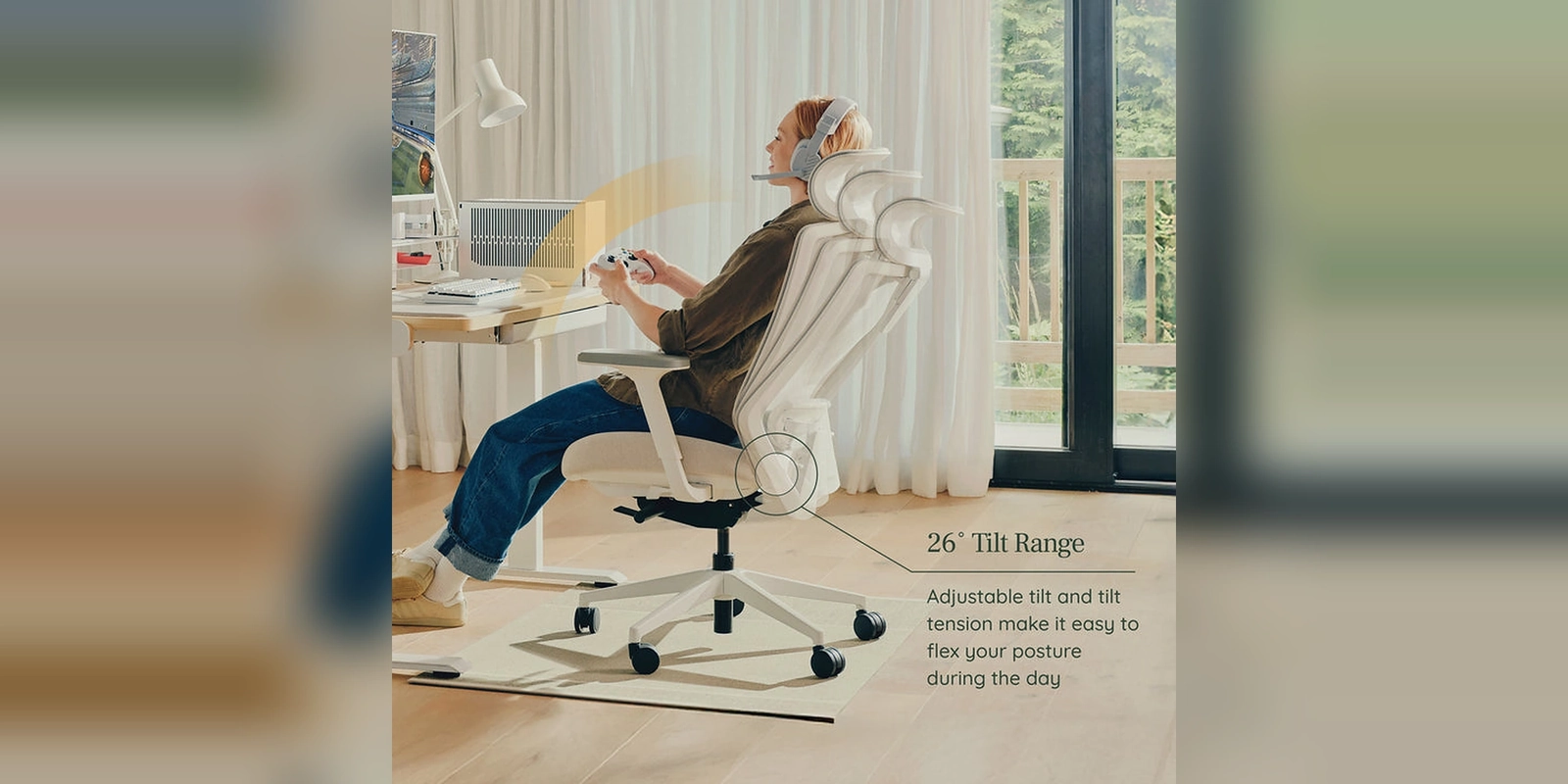
Recline supports position changes during the day, while tension changes the force required to lean back. Forward tilt can help some users move closer to desk work without perching on the seat edge. Recline, tension, and forward tilt give buyers more manual control over how the chair moves. The main question is whether you prefer this level of adjustment or a simpler chair design.
Materials and options
The Pro uses a mesh back and is offered with multiple seat or upholstery choices, including mesh, boucle, and leather-related options depending on the live configurator. Material choice changes airflow, feel, cleaning, and price. Treat each configuration as a distinct purchase rather than assuming conclusions about one upholstery apply to all.
Ergonomics and Long-Session Suitability
For long work sessions, the Pro’s strongest argument is not a single “ergonomic” component. It is the combination of seat depth, arm position, lumbar tuning, and controlled movement. Those adjustments help solve common fit conflicts: a seat that reaches too far behind the knees, arms that block desk access, or a back support that lands in the wrong place.
The chair cannot compensate for a monitor that is too low, a keyboard that forces shoulder elevation, or a day without movement. A well-configured chair is one element of a workstation. Take periodic breaks and change positions rather than searching for one posture to hold all day.
Fit: What to Check Before Buying
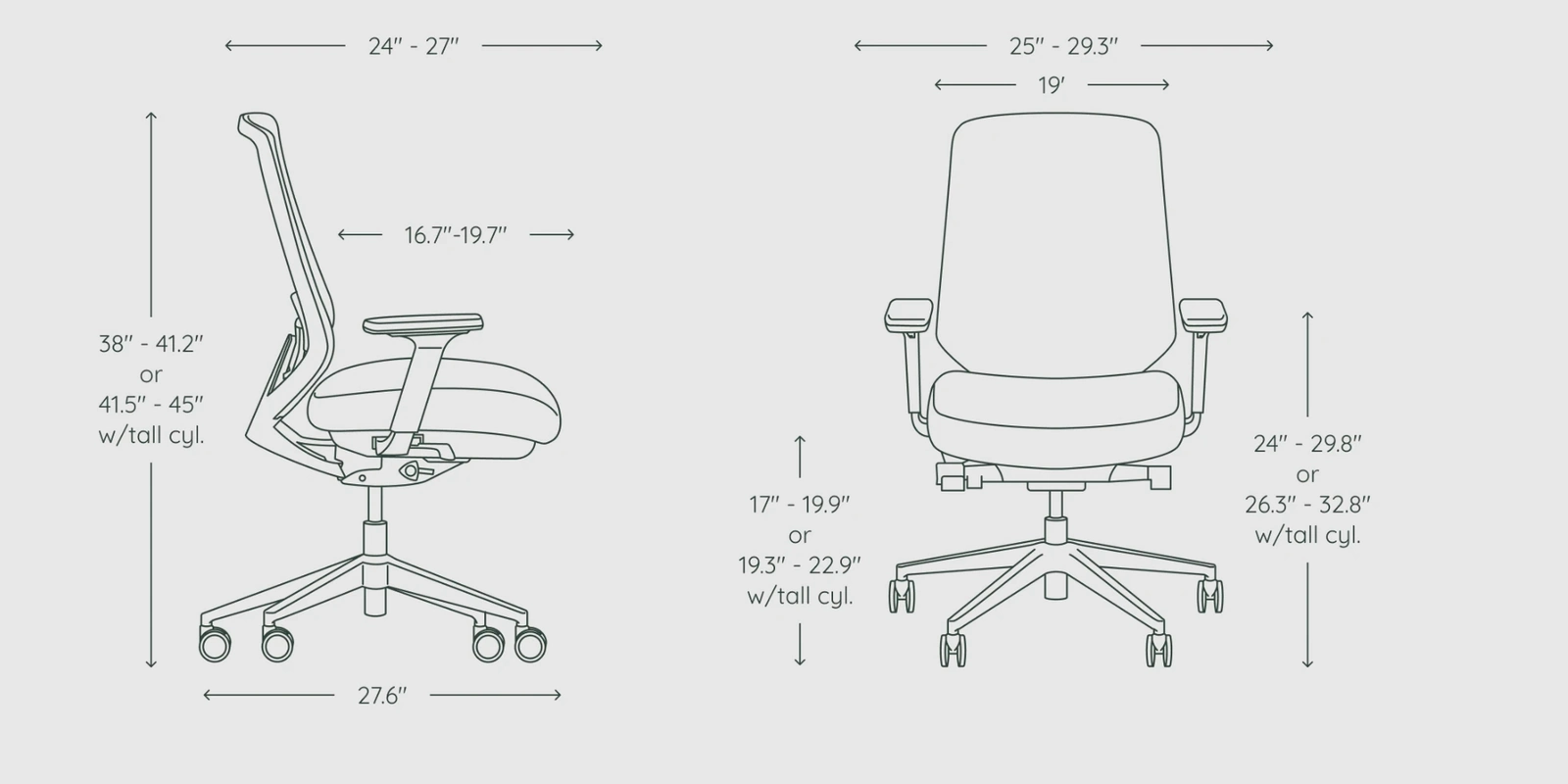
- Capacity: Stay within Branch’s 275-pound published limit.
- Seat relationship: Compare the chair’s live seat dimensions and depth range with a familiar chair.
- Cylinder: Choose standard or tall only after measuring desired seat height.
- Desk clearance: Check armrest and seat height against the underside of the desk.
- Headrest position: If adding one, verify height and depth range rather than assuming it fits.
- Room footprint: Allow space behind the chair for recline.
Build, Assembly, and Certification
Branch lists a 42-pound product weight and requires assembly. The product is presented as Branch lists the chair as BIFMA-compliant, an industry-standard certification that adds credibility to its construction claims, but it does not predict individual comfort. Keep the box and packing materials until you have reviewed the current return conditions and decided to keep the chair.
Warranty and Ownership
Branch’s current warranty page lists seven-year coverage for Ergonomic Chair Pro parts and components. Confirm who qualifies, geographic limits, exclusions, required proof, and whether upholstery wear is covered before buying. Seven years is stronger than the Sihoo Doro C300’s published three-year term but shorter than the 12-year Haworth Fern coverage.
Return logistics deserve equal attention. Furniture returns may involve original packaging, condition rules, and shipping charges. Check the live Branch returns page immediately before purchase and do not discard packaging during the trial period.
Price and Value
The Ergonomic Chair Pro has been positioned around the $500 mark, although current pricing, promotions, and option charges can change. At roughly that level, the Pro earns its value through adjustability and warranty rather than luxury materials or assembled delivery.
It is a better value than a cheaper chair only if you use the added controls and the fit works. It may be a better financial choice than a premium chair for buyers who do not need commercial configuration depth. Add the headrest, tall cylinder, and premium upholstery before comparing the final checkout total.
Pros and Cons
Pros
- Seat-depth adjustment supports a more precise fit.
- Five-direction armrests offer more positioning than height-only arms.
- Adjustable, removable lumbar support avoids a fixed one-size approach.
- Forward tilt and recline encourage position changes.
- Seven-year warranty is strong for the price tier.
- Multiple upholstery and cylinder options expand configuration choice.
Cons
- Published capacity is limited to 275 pounds.
- Assembly is required.
- Headrest and some choices increase the total price.
- Fourteen adjustments can require setup time and do not guarantee comfort.
- Return logistics may be inconvenient if original packaging or return shipping is required.
Branch Ergonomic Chair Pro vs. Sihoo Doro C300
The Branch Pro is the better choice if you prioritize direct control, a longer warranty, and a more restrained office design. The Sihoo Doro C300 costs substantially less, includes a headrest, lists a higher capacity, and uses adaptive lumbar support. Sihoo’s support follows movement; Branch gives the user more explicit lumbar tuning. Branch provides seven-year coverage, while Sihoo lists three years.
Choose based on fit and control preference, not the feature count alone.
Alternatives
Sihoo Doro C300
Choose the Doro C300 if your budget is below $300 and you want an included headrest, mesh seat and back, adaptive lumbar support, and coordinated 4D arms. Accept the shorter warranty and less direct lumbar control. Read our full Sihoo Doro C300 review for a closer look at fit, lumbar support, warranty, and value.
Haworth Fern
Choose the Fern if you want a premium contract-oriented chair, broader configuration, assembled delivery, and 12-year warranty. Expect a starting price well above the Branch Pro.
Branch Verve Chair
Consider the Verve if you prefer another Branch design and are willing to compare its specific controls and fit. Do not assume it is an upgrade. Compare the Verve’s controls, dimensions, pricing, and warranty directly with the Ergonomic Chair Pro before deciding.
Should You Buy the Branch Ergonomic Chair Pro?
Yes—if you fit the published range, want meaningful task-chair controls, and value a seven-year warranty at a midrange price. The Pro’s strongest quality is balance. It does not chase the lowest price or the longest warranty, but it covers the adjustments most likely to matter in a home office.
Do not buy it solely because “14 adjustments” sounds comprehensive. Measure your desk and current chair, price the exact configuration, read the return conditions, and make sure the 275-pound capacity is appropriate.
View Branch Ergonomic Chair ProFAQ
Q: Is the Branch Ergonomic Chair Pro good for long hours?
A:Its seat-depth, armrest, lumbar, and tilt controls make it a credible candidate for long work sessions. Comfort is individual, so fit, workstation setup, movement habits, and return terms still matter.
Q: Does the Branch Ergonomic Chair Pro have adjustable lumbar support?
A: Yes. Branch describes a two-way adjustable and removable lumbar support. Confirm the current configuration on the official page.
Q: Does it come with a headrest?
A: The headrest is an optional accessory rather than a universal standard inclusion. Include it when comparing prices and verify its adjustment range.
Q: What is the weight capacity?
A: Branch publishes a 275-pound capacity for the Ergonomic Chair Pro. Do not exceed the manufacturer’s current limit.
Q: How long is the warranty?
A: Branch’s current warranty page lists seven years for the Ergonomic Chair Pro’s parts and components, subject to the live policy and exclusions.
Final Recommendation
The Branch Ergonomic Chair Pro is a strong midrange option for buyers who want more control over fit without entering premium contract-chair pricing. Its seat-depth adjustment, 5D arms, tunable lumbar support, and movement controls form a well-rounded task-chair package. Before buying, confirm the dimensions, final configuration cost, return terms, and 275-pound weight limit.
Affiliate disclosure: Some links on Verivolab may be affiliate links. If you purchase through an affiliate link, we may earn a commission at no additional cost to you. This does not affect how we evaluate products.